
![[IPWatchdog Logo]](https://ipwatchdog.com/wp-content/themes/IPWatchdog%20-%202023/assets/images/temp/logo-small@2x.png)
Posts Tagged: "reexamination"
CAFC says PTO Reexamination Should Not Preclude Validity Challenges at District Court
Along with the willfulness finding, the Federal Circuit also overturned findings of no invalidity on a patent that had already survived multiple reexaminations at the U.S. Patent and Trademark Office in a decision giving patent owners further reason to question whether the Federal Circuit may be more aligned with anti-patent viewpoints… “We hold that a reexamination confirming patentability of a patent claim alone is not determinative of whether a genuine issue of fact precludes summary judgment of no invalidity,” the Federal Circuit’s opinion reads.
Federal Circuit reverses Board on erroneous application of the broadest reasonable interpretation
The Federal Circuit concluded that the Board’s construction of the term ‘body’ was unreasonably broad even given proper usage of the broadest reasonable interpretation claim standard… This ruling obviously makes perfect sense. Absent a comprehensive glossary that defines each and every term appearing in a patent application it would be impossible for any applicant to ever proscribe and/or preclude any and all possible broad readings for various terms that a patent examiner may come up with after the fact. Defining every term has never been required and anticipating frivolous examiner arguments has never been required, and is in fact considered inappropriate.
A Look Back at the Legislative Origin of IPRs
Those now familiar with IPR proceedings will already have recognized how little resemblance current IPR proceedings have to what most supporters of the AIA envisioned upon its passage. In current practice, the role of the Director as an independent IPR gatekeeper never materialized because the USPTO’s implementing rules bypass the Director altogether, assigning the institution function to the PTAB, which in turn routinely assigns both the institution and final decisions to the same three judge panel. As a result, most of the safeguards against patent owner harassment were lost…. By failing to adopt the implementing rules needed to carry out the intent of the AIA, and by adopting other rules and procedures that are plainly skewed towards petitioners, the PTAB has intentionally tilted its IPR proceedings against patent owners. While this has been good for the PTAB, which has quadrupled in size, it was neither Congress’s intent nor that of most of AIA’s supporters to create an unfair IPR patent “killing field.”
CAFC Vacates and Remands Inconsistent Rulings by the Board on Validity of two SynQor Patents
The Board failed to address all grounds for proposed rejections under the APA by ignoring certain arguments made by Vicor during the reexamination. Additionally, the Board failed to address all four Graham factors. “[E]vidence relating to all four Graham factors…must be considered before determining whether the claimed invention would have been obvious…” The Board’s decision was erroneous because the same panel reached inconsistent conclusions on the same issue between the same parties and on the same record, and without explanation.
PTAB’s Claim Construction Regarding Means-Plus-Function Limitation Was Erroneous
The Federal Circuit vacated and remanded the Board’s finding of obviousness of certain challenged claims based on a means-plus-function limitation, affirmed the Board’s finding of obviousness as to other challenged claims and affirmed the Board’s findings that the prior art discloses all other limitations of the challenged claims on appeal… In a patentability determination, the Board must identify the structure of a means-plus-function limitation disclosed in the specification; it is insufficient to merely disagree with patentee’s arguments. Additionally, if a practitioner reopens prosecution and amends claims during inter partes reexamination, additional prior art can be cited against the amended claims.
CAFC may consider whether an inter partes reexamination was properly instituted based on the presence or withdrawal of a party
In re AT&T Intellectual Prop. II, L.P., Appellant AT&T Intellectual Property II, L.P. (“AT&T”) appealed from a final decision of the Patent Trial and Appeal Board (“Board”) in an inter partes reexamination where the patent-in-suit was found invalid as anticipated.
Cisco Successfully Invalidates Patent for Lack of Written Description
Cisco challenged Cirrex’s patent via inter partes reexamination, asserting a lack of written description. The Board affirmed the Examiner’s findings, that the patent, as amended, contained both patentable and unpatentable claims. On appeal, the Federal Circuit affirmed in part and reversed in part, holding that all of the claims are unpatentable for lack of written description.
En Banc Federal Circuit Dodges PTAB Constitutionality
Patlex, which dealt with reexamination of applications by an examiner — not by an Article I tribunal — could be considered a next step beyond McCormick. MCM, however, simply cannot be viewed as consistent with either Patlex or McCormick on any level. Indeed, the Supreme Court was abundantly clear in McCormick, which remains good law. The courts of the United States (i.e., Article III courts), not the department that issued the patent, is the only entity vested with the authority to set aside or annul a patent right. Since the PTAB is not a court of the United States, it has no authority to invalidate patent rights. It is just that simple.
Affinity Labs of Texas Loses Reexamination Appeal; Reexamination Estoppel Does Not Apply
The Federal Circuit affirmed a Patent Trial and Appeal Board (“Board”) decision to uphold the unpatentability of several claims of a patent owned by Affinity Labs of Texas, LLC (“Affinity”). An Examiner initially found the claims to be unpatentable during two inter partes reexaminations and an ex parte reexamination of Affinity’s patent…. The estoppel provision of pre-AIA 35 U.S.C. § 317(b) for reexamination proceedings applies, claim-by-claim, to the party in the litigation, and does not trigger termination of reexamination proceedings involving other parties and other claims.
I hope Trump’s ‘America first’ will apply to inventors
I believe it’s not a good thing to be an inventor in the US and I hope that Trump’s “America first” will apply to inventors. Let me explain why. My name is Jean-Paul Castille, I have a degree in Engineering from “Ecole Nationale Supérieure des Arts et Métiers” (ENSAM), a major engineering school of France and I am an independent inventor. I am the president of Antor Media Corporation, a US patent licensing firm. My career has been dedicated to invention, the development and commissioning of prototype systems in different areas of the industry.
In non-precedential decision CAFC reverses PTAB finding of obviousness in reexamination
In re: Natural Alternatives, LLC, 2015-1911 (opinion and errata) is a non-precedential but still notable case from the U.S. Court of Appeals for the Federal Circuit that finds the claims of a patent that was in reexamination to be patentable, despite the examiner and the Patent Trial and Appeal Board finding that the claims were obvious. While the examiner had cobbled together various references to make an obviousness rejection, the examiner failed to set forth “sufficient facts” supporting his position that the prior art disclosed the limitations of Natural’s claims in a manner that renders the claimed invention obvious.
Phillips Claim Construction Standard Applies to Ex Parte Reexam After Patent Expires
The Court held that the Board improperly continued to apply the BRI standard following the expiration. While the examiner properly applied the BRI prior to expiration, the BRI standard no longer applies the moment the patent expires – even if it means the Board applies a different standard than the examiner.
SCOTUS asked to consider proper scope of ex parte reexamination proceedings at USPTO
Pactiv, LLC v. Lee presents a question fundamental to all ex parte reexaminations: whether, after the PTO initiates an ex parte reexamination, that proceeding is limited in scope to the question determined to qualify as the “substantial new question of patentability.” The “substantial new question of patentability” identified by the Director included certain prior art references. But the examiner subsequently rejected several of Pactiv’s claims due to wholly different prior art references. There was never any determination under 35 U.S.C. § 303 that these other references raised a “substantial new question of patentability,” nor did the Director issue the order required under Section 304 identifying a “substantial new question of patentability” based on these wholly different prior art references.
Judgment With Prejudice is Res Judicata and not Vacated Even if Mooted by Later Reexamination
Cardpool, Inc., v. Plastic Jungle, Inc., NKA Cardflo Inc. (Fed. Cir. Apr. 5, 2016) (Before Newman, Reyna, and Wallach, J.) (Opinion for the court, Newman, J.)(Federal Circuit held dismissal with prejudice operates as res judicata for the same cause of action even if a subsequent reexamination amends claims.).
How the AIA requires the USPTO to be a patent system arms dealer
Not only does the Patent Office handsomely charge for the acquisition and maintenance of a patent, they also handsomely charges for the right to challenge those patents after issue. On its face this creates a perverted incentive. The arms dealer nature of how the AIA has transformed the Patent Office is not lost on many within the industry. Add in the insecurity of the USPTO budget and the fact that the Patent Trial and Appeal board (PTAB) directly reports to the Director, thereby not enjoying any true judicial autonomy (at least on paper) and you would be hard pressed to have come up with a more conflicted structure or system.
Varsity Sponsors
![[Advertisement]](https://ipwatchdog.com/wp-content/uploads/2026/05/Protege-in-PatentSight-product-350x250-Ad-A.png)
![[Advertisement]](https://ipwatchdog.com/wp-content/uploads/2026/05/LexisNexis-Jun-11-2026-sidebar-700x500-1.jpg)

Latest IPW Posts
Patents Don’t Monetize Themselves: Turning Portfolios from Cost Centers into Revenue Assets
June 8, 2026 @ 01:32 pmAutomating the Patent Process at the USPTO to Save Inventors Money
June 8, 2026 @ 11:15 amReaders React: What to Expect After the Supreme Court’s Hikma Ruling
June 7, 2026 @ 12:15 pm
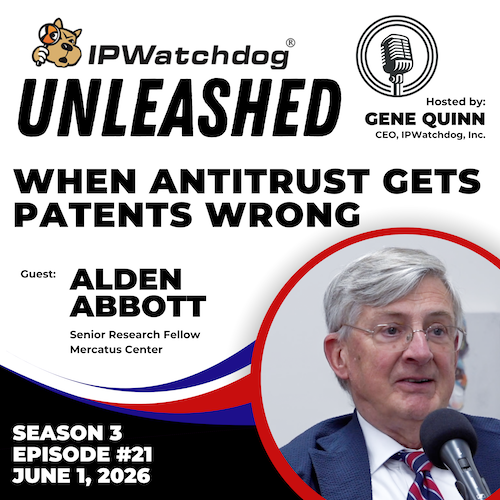
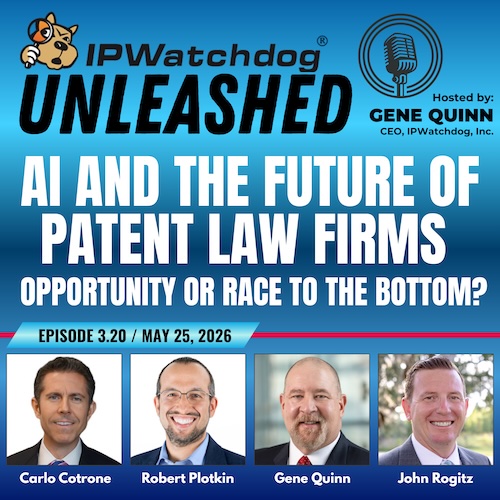
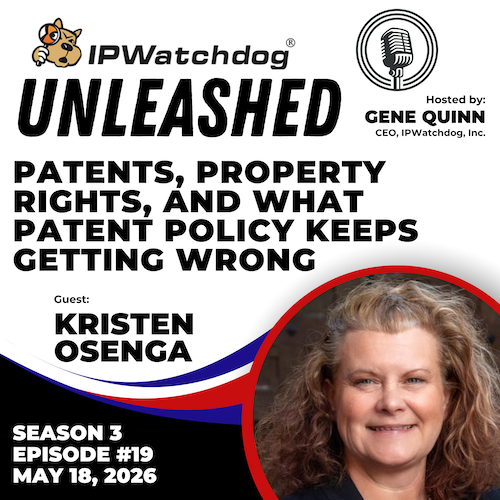
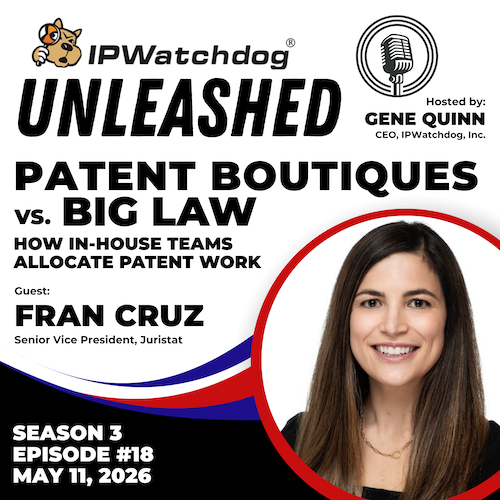
Latest Podcasts


IPWatchdog Events
Webinar: How AI Is Transforming IP Strategy Across the Patent Lifecycle
June 11 @ 12:00 pm - 1:00 pm EDTWebinar: AI in Patent Drafting – When to Use Generative AI – and When Not To
June 25 @ 12:00 pm - 1:00 pm EDTFrom IPWatchdog
![[Advertisement]](https://ipwatchdog.com/wp-content/uploads/2021/12/WEBINAR-336-x-280-px.png)
![[Advertisement]](https://ipwatchdog.com/wp-content/uploads/2021/12/Ad-4-The-Invent-Patent-System™.png)