
![[IPWatchdog Logo]](https://ipwatchdog.com/wp-content/themes/IPWatchdog%20-%202023/assets/images/temp/logo-small@2x.png)

 0
0 AI regulation could be years away, and fast-moving businesses cannot wait for guidelines. As AI adoption accelerates, it is crucial that companies act proactively to develop risk, compliance, and ethical frameworks to ensure sustainable innovation and responsible IP use.
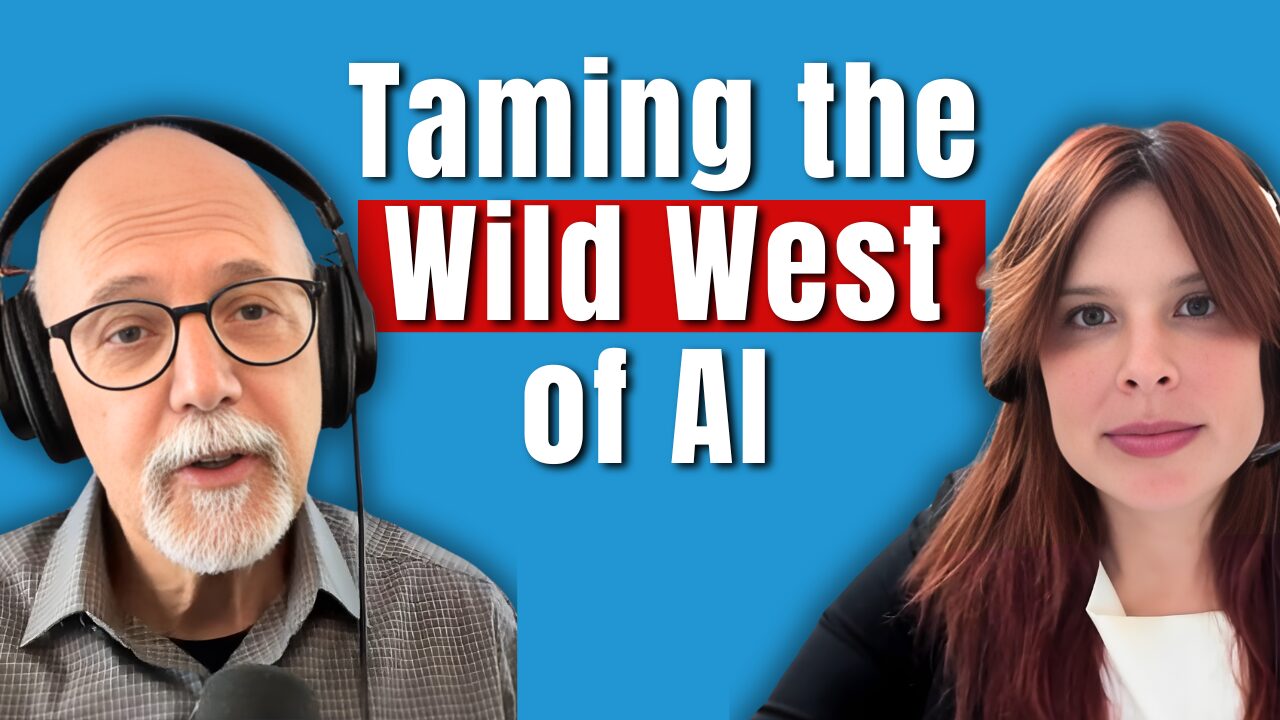
On the current episode of Understanding IP Matters, Allison Gaul, a registered patent attorney who evaluates digital products with an eye toward intellectual property strategy, value creation, and legal risk, discusses the aggressive landscape of data acquisition by various AI entities. Gaul provides some tips for AI startups, investors, and companies using AI, such as the importance of a publicly facing policy of responsible AI use and compliance.
Gaul and host Bruce Berman discuss:
- Gaul’s insights into what venture capitalists want to see when investing in AI startups. “They want to know you have a maturity level with respect to your AI risk understanding, your compliance policies, so you’re not going to create substantial problems down the road.”From advising investors Gaul has learned investors “want some kind of assurance that executives know what they’re doing and aren’t going to create risk”.
- Why focusing on a proprietary single large language model (LLM) may be too expensive or limiting. Gaul believes “we’re starting to see a transition there. This is a projection that I’ve been making that as AI continues to evolve, we’re going to see people drifting to these targeted use models that have been trained on highly specific data sets.”This transition is because targeted or small models are “more cost effective for companies to build on that those from businesses like ChatGPT and the Anthropics.”
- Gaul has recognized a recent shift in IP protection for small AI-driven companies: “I’m seeing people leverage more trade secrets rather than going for patenting because a lot of the magic is in your data set and that’s not individually protectable.”Trade secrets are especially popular for the AI offerings of these companies because they “really do not want to disclose how they did it, what they trained it on or how they’re leveraging it until they’ve got enough users in the tank that they can kind of guarantee that there’s a good chance they’re going to be able to get some money.”
- Patents are not a focus for startup AI companies Gaul speaks to: “What is the value of patents to a small startup if somebody else using Codex or Windsor can come along and generate a very similar competing product within an hour?” Gaul thinks this is a valid question. “Why should I spend $10,000, $20,000, $50,000 on IP protection when what’s really going to be the most important for my business is actually just not telling anybody what’s in the sauce until we can get cooking.”
![[Advertisement]](https://ipwatchdog.com/wp-content/uploads/2025/12/Harfang-IP-Dec-11-2025-sidebar-700x500-1.jpg)
![[Advertisement]](https://ipwatchdog.com/wp-content/uploads/2025/11/Juristat-Ad-Firm-Cost-Management-Nov-18-Dec-31-2025-Animated-Varsity-Ad-final.gif)
![[Advertisement]](https://ipwatchdog.com/wp-content/uploads/2025/11/PTAB-Masters-2026-sidebar-early-bird-700x500-1.jpg)
![[Advertisement]](https://ipwatchdog.com/wp-content/uploads/2025/12/LIVE-2026-sidebar-early-bird-new-700x500-1.jpg)







![[Advertisement]](https://ipwatchdog.com/wp-content/uploads/2021/12/WEBINAR-336-x-280-px.png)
![[Advertisement]](https://ipwatchdog.com/wp-content/uploads/2021/12/Ad-4-The-Invent-Patent-System™.png)




Join the Discussion
No comments yet. Add my comment.
Add Comment