
![[IPWatchdog Logo]](https://ipwatchdog.com/wp-content/themes/IPWatchdog%20-%202023/assets/images/temp/logo-small@2x.png)
 19
19 “Quality starts with employees. This is true for manufacturing cars and examining patents. A belief in the agency mission, having meaningful input and enough time to perform a quality job are important.”
 Our patent system has been relentlessly attacked for the better part of the last 20 years. Patents have been blamed for everything from the creation of patent litigation abuse to high prescription drug costs. There is scant evidence of an actual causal relationship, yet the attacks continue.
Knowing that it would be impossible to outright ban patents, the popular argument is that poor quality patents that should not have issued are responsible for a majority of litigation issues and drug prices. In response, Congress created the Patent Trial and Appeal Board (PTAB) at the United States Patent and Trademark Office (USPTO) in 2011 to make it easier to invalidate “low quality” patents without the need for federal district court litigation. Yet, after more than 10 years of invalidating issued patents through the PTAB, the criticism of our patent system has not abated.
These patent critics have called for new policies to change the behavior of inventors. The USPTO recently announced substantial fee increases and new “rules” that many argue actually amount to legislation to force behavior changes and decrease the number of patent applications that have historically been available to inventors. If implemented, these changes will significantly increase the cost and complexity of obtaining patents, but they will not address the perceived deficiencies in the patent system. Improving the operations of the USPTO, however, is the best opportunity to improve the patent system.
An Alarming Trend
Recent workplace rankings by USPTO employees in the Best Places to Work in the Federal Government, a little-known survey outside of the government, should be a red flag for supporters of our patent system. Twenty years ago, the USPTO’s overall survey result was very poor but improved dramatically until the USPTO reached the top place for employee satisfaction in 2013. The improvement was the result of focused efforts by leadership to improve the agency.
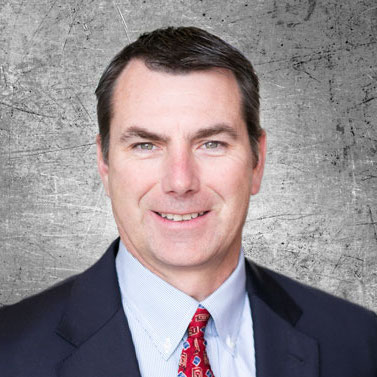
In the last 10 years, the USPTO’s overall survey score has steadily decreased. While the current state is not back to the lows of decades ago (the USPTO ranked 236 out of 459 subcomponent agencies), the downward trend is alarming. I had the pleasure of being a leader of the USPTO and working with exceptional patent and trademark examiners. Examiners have scientific degrees; many are attorneys, and they perform a detailed study of technical documents every day. It should not be a surprise that their workplace satisfaction is reflected in the USPTO work product. Quality starts with employees. This is true for manufacturing cars and examining patents. A belief in the agency mission, having meaningful input and enough time to perform a quality job are important.
The USPTO reports to the Commerce Department and Secretary of Commerce Raimondo has received well deserved accolades for her leadership of Commerce policies. Among her top achievements are working to get affordable, reliable high-speed Internet service to everyone in America, revitalizing the U.S. semiconductor industry, and building a climate-ready nation. In addition to these important achievements, the Commerce Department has been a top ranked place to work among large federal places to work. But, for some reason, those leadership achievements haven’t extended to the USPTO.
Looking Ahead
The next administration faces a difficult situation. The drop in the USPTO ranking continues under President Biden and reversing that in a second term will require changes in both policy and leadership. Neither is easy to achieve in a second term. Likewise, a second Trump administration would return to the Republican platform of shrinking government and a hostility toward government labor unions. This is not a recipe for improving federal employee engagement.
Improving America’s patent system starts with supporting the front-line employees of the USPTO. Given the right support, tools, and leadership, the agency can attract the best talent to carefully examine and issue the world’s best patents and trademarks.
Image Source: Deposit Photos
Author: alexmillos
Image ID: 31664529
![[Advertisement]](https://ipwatchdog.com/wp-content/uploads/2025/11/Juristat-Ad-Firm-Cost-Management-Nov-18-Dec-31-2025-Animated-Varsity-Ad-final.gif)
![[Advertisement]](https://ipwatchdog.com/wp-content/uploads/2025/11/PTAB-Masters-2026-sidebar-early-bird-ends-Jan-7-700x500-1.jpg)
![[Advertisement]](https://ipwatchdog.com/wp-content/uploads/2025/12/LIVE-2026-sidebar-early-bird-new-700x500-1.jpg)






![[Advertisement]](https://ipwatchdog.com/wp-content/uploads/2021/12/WEBINAR-336-x-280-px.png)
![[Advertisement]](https://ipwatchdog.com/wp-content/uploads/2021/12/Ad-4-The-Invent-Patent-System™.png)


Join the Discussion
19 comments so far.
Random Examiner Crying
July 10, 2024 04:28 pmThe public has to understand the Examiner Count System and we need a fix for it.
The examiners get rewarded with more counts when the application is allowed. Writing an allowance is only 1-2 pages of work and some forms, but writing an office office, we get fewer counts and time for 10-100 pages of work (depending on the art unit).
All examiners want to write allowances over rejections. I don’t care how you argue how examiner abuse “obviousness” but it is just as easy for us to justify how it is “non-obvious.”
So why are we not writing more allowance since we get rewarded more? My answer is, I can’t.
First, would someone agree with me, that is from the art unit spe and QAS reviewing it, under the same statute, some art units can be more strict over another, forcing examiner to reject more.
Also, is it possible the work/invention from the attorney or applicant is just not good, forcing examiner to ultimately write the rejection?
Please look into it. Why some art units you have examiners that can allow 90+% of their applications and the examiners of the art unit can do maximum overtime and max bonuses, with no problem? You will not see anyone leave from those art units and probably don’t want me to talk about it.
Then you also have art units that are struggling to retain their examiners with low allowance rate. We have examiners writing 20-100 pages of office action per application with low allowance rate and
are constantly struggling to maintain the production they need.
Is that by the choice of the examiner? Do we want to suffer, choosing to write the long rejections over filling out forms for the allowance, which the allowance grants us twice of the production hours over the rejection? I think the answer is obvious.
Review the system all you want. We need a change.
concerned
July 8, 2024 07:06 amFortunately, I am not smart enough to come up with a second idea to even think about going this route again.
I happened to meet a patent examiner who works from home. He encouraged me to retry on my original patent application. Even if the patent was granted, just to get creamed at the PTAB later on?
The same PTAB that wrote on my original attempt that I met the law as passed by Congress (and signed by the president) but not their case law. That was all the tuition I want to afford.
Schumann
July 6, 2024 09:02 pmYou need to roll your evaluation forward to today through AIA and SCOTUS ruling making patents “public Rights”.
I can’t imaging anyone in the right mind would waste his time and money to invent and register his invention to get “public right” to his invention even if the corrupt USPTO could somehow miraculously shake loose of the Big Tech hold and control and come clean!
Don Baker
July 6, 2024 04:56 pmWhen you say that what is “obvious” by can be determined by Patent Examiner thinking what a “person having ordinary skill in the art” would have found “obvious” at the time the patent application was filed, you have already committed intellectual fraud.
To the best of our knowledge, it requires a combination of telepathy and time travel that no mortal possesses.
It’s like that lawyer’s nostrum, “what a reasonable person would have thought”.
Well, every bigot and bully is reasonable – just ask one.
We have some people running for President you could ask.
Small wonder that patent examination and adjudication is frequently broken.
Don Baker
July 6, 2024 04:48 pmWhen you say that “obviousness” can be determined by a Patent Examiner deciding what a “person having ordinary skill in the Art” would have considered “obvious” at the time the patent application was filed, you have already committed intellectual fraud.
It requires a combination of telepathy and time travel that (to our knowledge) no mortal possesses.
It’s like that lawyer’s nostrum, “what a reasonable person would have thought”.
Well, every bully, bigot and liar is “reasonable” – just ask one.
We have some people running for President you could ask.
simon bronshteyn
July 6, 2024 04:34 pmAlso, please return the previous “quick patent search” option on your website because it was much more simple and more efficient for search conducted by a regular inventors.
Don Baker
July 6, 2024 04:26 pmExcuse me, but why should one have to be a lawyer to be a good patent examiner?
Lawyers have made the law, the regulations, the procedures and the process a trip-wire maze where ordinary people fear to tread:
“Lawyers and Judges wrap Justice taut
“in a steel-cable Gordian knot”
Why should one not think that lawyers have made this society violent, divided and unequal? Because none of us can go to Court and get honest and reliable Justice.
Why not get a four-year degree in whatever interests you, then get a Master’s in Patent Examination? Not to mention clean up and simplify the patent code.
When I got my PhD in 1994, after being disabled by a DUI driver in 1985, I must have filled up a grocery bag with rejections letters. Not only was I too old and disabled, there were 50 to 200 candidates for every research and academic position that I wanted. I never thought of becoming a Patent Examiner. No College or University had any courses for it.
And why not? I’ve seen some Examiners pull stunts that would never have passed in college courses I took. Why don’t we have certified degree programs taught by knowledgable Professors in Patent Examination? Just the process of regularizing and certifying the content might be the necessary enema to flush out all the illogic and upgrade the intellectual integrity.
Unhappy Female Inventor
July 6, 2024 03:40 pmYes, support the patent examiners! Let them defend their own work against PTAB judges that are often not as qualified and are not as experienced in the technical field as the examiners. PTAB judges are not better. PTAB judges often simply get it wrong, do not go BACK IN TIME to the day the invention was thought of, and simply believe things that were not obvious then, are obvious now.
Why is there some assumption that PTAB judges are more qualified than patent examiners? They are not.
Is there some reason that the patent examiner can not defend their work at a PTAB trial? Is there some reason an inventor is not allowed to speak at a PTAB trial?
This nonsense about PTAB making it easier to invalidate “low quality” patents without the need for federal district court litigation. That’s not true. It’s not true because the current director allows many inventors who are ALREADY in district court have to ALSO fight in a parallel litigation court which INCREASES expenses.
If an inventor has a low quality patent, they will end up with a low quality lawyer and their infringement will be thrown out in a regular district court. At least at district court the judge does not get paid to institute the trial, and get bonuses for kiling patents.
Want to support the USPTO? Stop throwing patent examiners under the bus without letting them speak and defend their work.
Don’t automatically defend the PTAB judges.
Defend the patent examiners who work at the USPTO!
Julie Burke
July 6, 2024 11:10 amWhether manufacturing cars or examining patents, the quality element of the workers’ performance and appraisal plan drives worker behavior.
Consider how USPTO leadership quietly watered down the quality element of the 2020 PAP – while touting to Congress that the changes were intended as a roadmap to improved quality.
https://lnkd.in/gFyupgcv
“Omitting 37% of the [Major Quality Activities] from the USPTO’s overall quality statistics will create the impression that patent quality is higher than it actually is. What if 37% of the critically important car components were optionally or haphazardly installed by autoworkers, without risk of running afoul of quality control?”
The 2020 PAP, which has done nothing to improve actual quality of the examination process, is a key pain point for both patent examiners and practitioners.
Hopefully the GAO’s upcoming report on patent examination quality will prompt some long overdue reform.
Julie Burke
July 6, 2024 11:08 amA recent reddit poll showed that 76/294 examiners considered the 2020 Performance and Appraisal (PAP) revision as the worst USPTO policy in the last 10-15 years.
https://lnkd.in/gcz8B9H3
https://www.linkedin.com/posts/julie-burke-492264120_how-to-really-improve-the-us-patent-system-activity-7215357511367843841-V0F4?utm_source=share&utm_medium=member_desktop
simon bronshteyn
July 6, 2024 10:16 amAs a regular invemtor I was using a quick pateny search on the
USPTO site for many years. It was very simple and very useful.
However, several years ago the USPTO implemented new search site which is much more complicated and it not nery imformative.
I hope, regular inventors will have access to both searching tools.
Examiner
July 6, 2024 09:25 amF22: what does working from home, or from Virginia ,or Indiana, have to do with anything?
Most employers nowadays offer work from home arrangements , and uspto needs to attract and also retain quality talent.
Quality examination can be performed from home, and from any location within the US.
At the same time,bad examination can also be performed from within the Uspto office or campus.
F22strike
July 5, 2024 05:18 pmIt is important to review the evolution of the patent examining corps at the USPTO over the past fifty years.
When I first became a registered patent attorney in the mid-1970’s, the examination of patent applications at the USPTO was far superior to what it has become. Back then, and throughout the 1980’s and 1990’s, many US patent examiners had gone to college on the GI Bill. While they did not graduate from Caltech or MIT, many patent examiners had graduated from very good engineering colleges like Lehigh, for example. Most of them were smart, diligent and professional – and they were fluent in the English language. When you dealt with a US patent examiner back then, they typically had many years of experience. Prosecution with these examiners was very efficient and they were reasonable. Unfortunately for inventors and for companies seeking to protect their R & D, many of these experienced patent examiners were apparently able to retire after 25 years of service at the USPTO. They had 5 years of military service that counted towards their retirement from civil service.
Starting around the year 2000 the knowledge, skill and experience of US patent examiners began to noticeably decline. The USPTO had a huge influx of inexperienced patent examiners. It seemed to be
using the private patent bar to train its new patent examiners. Hopefully, few of the patent attorneys that read the postings on the IP Watchdog website had to suffer through the reign of USPTO Director
Dudas from 2004 to 2009. He had a finance degree and decided that the cure for “bad patents” that big tech was beginning to scream about was to drastically reduce the rate of allowance. But the rejections
became ridiculous. Starting under Director Dudas patent examiners at the USPTO (or their Primary or Supervisory Primary examiners) seemed to initially form a gut feeling that the claimed invention was not patentable and then they looked for and applied prior art to justify that feeling thus creating a plague of “moving target rejections”. Prior to 2004 I had filed perhaps a dozen appeals at the USPTO. As a result of
the apparent directive from Director Dudas to arbitrarily reduce the rate of allowance, I began filing at least one appeal per month. Predictably the backlog of appeals at the USPTO skyrocketed from a few thousand to tens of thousands. Like many other practitioners I also started filing lots of continuation patent applications. Director Dudas then issued a rule limiting the number of continuations that could be
filed, ignoring the plain meaning of the applicable section of 35 USC. In Tafas v. Dudas (CAFC 2009), the Federal Circuit held that USPTO lacked the authority to promulgate rules limiting the number of continuation patent applications. Prosecution at the USPTO improved during the term of USPTO Director Kappos from 2009 to 2013. He was well qualified for the position having earned a BSEE degree from UC Davis, a JD degree from UC Berkeley. He had spent 25 years as an in-house patent attorney at IBM.
Then the death knell sounded for the US Patent system with the passage of the AIA in 2012 at the behest of big-tech and its lobbyists. This Act implemented IPR proceedings resulting in: 1) no presumption of validity of patent claims during subsequent IPR examination; 2) broadest reasonable interpretation (BRI) of claim terms during IPR proceedings; 3) unlimited serial IPRs against the same patent; 4) no standing requirement for filing an IPR; 5) substantial financial incentives for the USPTO and the administrative law judges on the PTAB to grant IPR petitions; 6) stacked panels at the PTAB to, IMO, make sure that challenges are successful in high profile IPRs; and 7) 80-90% cancellation of patent claims in IPRs.
The SCOTUS decision in the 2006 eBay case had already made injunctive relief in patent infringement lawsuits difficult to obtain. The dramatic judicial expansion of Section 101 subject matter exceptions in
the 2012 Mayo and 2014 Alice decisions by the SCOTUS just piled onto the inevitable outcome of US Patents being worthless. Then, in the 2018 Oil States case, the SCOTUS put the nail in the coffin for the
US patent system when it held that IPRs do not violate Article III of the US Constitution, or the Seventh Amendment right to a jury trial, ignoring its prior case precedent that a US patent is a property right.
IMO big-tech continues to use its lobbyists to ensure that there will be no fix to the out-of-control IPR disaster and the innovation-killing judicial limitations on patentable subject matter. If you have a
monopoly, the last thing you want is someone to come up with a better mousetrap that you can’t use for free. The Senators and Representatives in the US Congress have forgotten why, in Article 1, Section 8, Clause 8 of the US Constitution, the founding fathers gave Congress the power to enact laws “To promote the Progress of Science and useful Arts, by securing for limited Times to Authors and Inventors
the exclusive Right to their respective Writings and Discoveries.”
The US public could not care less about the US patent system. If you disagree, please post a link to a video showing protestors with signs saying, “REFORM PATENT LAW NOW!”
My final US patent prosecution for a client involved an application that was filed in 2018. It was subjected to multiple moving target rejections by the examiner, and two appeals in which the PTAB itself
made new rejections. After the start-up company was wrongfully denied a US patent with a reasonable scope of protection, it was liquidated and all the financial investment and sweat equity were lost. In retrospect, the USPTO probably did the client a favor. If, against all odds, the invention had become commercially successful, the odds are 80-90% that the claims of its patent would have been cancelled by
the PTAB, and this cancellation would likely have been affirmed in a Rule 36 decision from the CAFC.
Examiners now frequently work from home and are safe in their jobs as long as they reject, reject, reject. They are the antithesis of the examiners I worked with during the first half of my career.
I have the following proposals for improving the USPTO examination corps. 1) patent examiners cannot belong to a union; 2) just like USPTO trademark examining attorneys, all US patent examiners must be attorneys admitted to the bar of at least one state (current patent examiners who do not meet this qualification are grandfathered); 3) the USPTO is moved from Alexandria to Indianapolis or Kansas City and examiners must work in the office at least 50% of the time; 4) moving targe rejections are not allowed absent extraordinary circumstances; 5) the count system is revised to remove the incentives to examiners for gaming the system; and 6) examiners are penalized in terms of promotion, bonuses, and/or counts for not allowing claims later found to be patentable by the PTAB, CAFC or a federal district court .
Pro Say
July 5, 2024 04:25 pm“Given the right support, tools, and leadership, the agency can attract the best talent to carefully examine and issue the world’s best patents and trademarks.”
Bingo Russ. But sadly for today’s Patent Office (including its hard-working Examiners) and indeed for America itself, however, it is currently being led by someone who — including given the noted, baseless attempted fee increases and horrendous, scorched-Earth, innovation-killing terminal disclaimer changes — cares only for her behemoth corporate infringer cabal; and not for American innovation.
She cares so much for her critically-important Examiners that — with the new TD changes (which will in any case thankfully be struck down by the courts should she put them into effect) — that she’s willing to toss yet another monkey on their already-burdened backs.
If that’s not love and respect America’s Examiners, nothing is.
Congress: Give Kathi Vidal her walking papers.
Before it’s too late.
Don Baker
July 5, 2024 12:11 pmI’ve had a number of Examiners who have been very helpful to me and to whom I am grateful. Those are good people, and I think represent most of Government Service.
But it’s hard to be supportive when the Office allows other unaccountable Examiners and reviewers to use procedure as a personal bludgeon. I’ve been granted 10 patents, all prosecuted Pro Se. I make mistakes, which I would gladly correct if told in plain English what they are. But when someone beats me over the head with a half page of legal citations for the sin of accidentally splitting a table across two pages, I lose my respect for the Office. Even more so on Restriction/Elections, where the Examiner alleges that I tried to patent two different things and deliberately gives me a Hobson’s Choice. I can either drop one of them, or I can claim they are both the same invention. But if I claim them both, and the Examiner “finds” prior art to exclude one of them, I lose both of them.
Can you say “High School mean girls”?
And when one has seen at least one Examiner invent false prior art out of whole cloth, and get away with it, respect for the Office tanks.
I reviewed the other patents that one of those examiners granted, and found high-tech patents by large companies with 3 to 5 claims of very different subject matter on the same invention. The difference – I’m a disabled Pro Se inventor, and those companies have the resources to make the Examiner look like a malicious idiot in Court.
In my NPPA currently up for examination, filed three years ago, I disclosed improvements to a patent already granted, with the same types of claims regarding an electronic circuit, with analog and partially-digital embodiments, and an algorithm for making the digital embodiment work better on small processors with limited 4-function math processing units. I did not do my best work, because I’d been sick with infections. If the Examiner had the professional honesty and consideration to just show me how I’ve done something with prior art, I’d cut it out myself.
I have no interest in reinventing any wheels.
I have three engineering degrees and a PhD, which age, illness, pain and medications have diminished. It’s getting a lot harder to do this kind of work. But when I see Examiners, who from their writing clearly don’t have many “ordinary skills”, deliberately trash my work, just because I’m Pro Se, or elderly, or disabled, or merely enthusiastic about it, I think they’re getting the kind of support they give us.
Dana Robert Colarulli
July 5, 2024 11:26 amWell said, Russ and I happy that I was able to be part of that climb (and hopefully contributed too) to 2013 in the Best Places to work survey. I think in the years leading up to that the Office benefited from growing ranks where employees felt part of a successful and unique operation and supported by management. But agree, effectively leading the policy discussions and pushing back on bad ideas is critical to making sure the system works. Certainty and predictability translates directly into value of the rights issued.
Vincent Capuano
July 5, 2024 10:55 amCan we start by getting rid of tying examiner compensation to the examiner “count” system?
Anon
July 5, 2024 07:31 amAs I have long stated, the United States Patent and Trademark Office is meant to obtain a full spectrum of people wanting to protect their innovation, and thus must be robust as to a full spectrum of quality of written applications (the MPEP even addresses how examiners should be helpful to pro se applicants).
Thus, the only real version of quality on the output side – that is, quality in regards to granted patents – is Examination Quality.
This means more than the Office’s prior ‘just say NO to innovation (the infamous Reject Reject Reject paradigm), and equally means more than a rubber stamp of affirm (but we reject ~80% in post grant review).
My clients pay for a complete and proper examination under the law.
Schumann
July 5, 2024 01:48 amYou should clarify that PTAB kangaroo courts judges are not employees and more related to corrupt USPTO administration.
Also, it would help clarifying “patent critics” are big tech and their hired guns and associations or syndications.