
![[IPWatchdog Logo]](https://ipwatchdog.com/wp-content/themes/IPWatchdog%20-%202023/assets/images/temp/logo-small@2x.png)
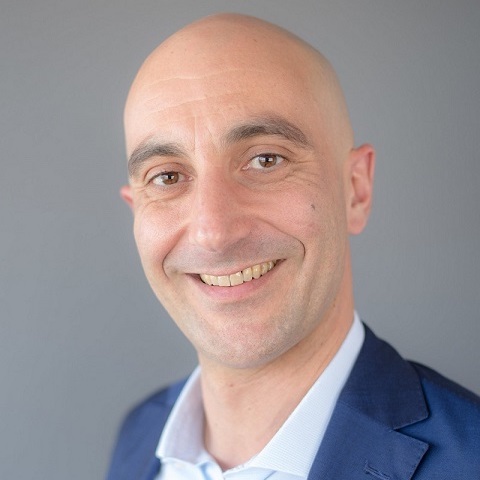
Matteo Sabattini, Ph.D.
Executive Advisor, Government Affairs
Sisvel Group

Dr. Matteo Sabattini is a thought leader in the IP space. He has years of expertise in technology licensing and IP strategy, and his background blends business, policy, and technical skills. He has published extensively and regularly speaks at industry events on IP matters. He holds an MBA from the George Washington University (GWU), a PhD in electrical engineering from the University of California, San Diego (UCSD), and a Laurea Magistrale also in electrical engineering from the University of Bologna.
Dr. Sabattini currently serves as Executive Advisor at Sisvel, where he guides Sisvel’s policy and advocacy efforts, with a focus on enabling policymakers in Europe, the US, and Asia to understand how Sisvel’s efficient, market-driven licensing solutions benefit consumers and power innovation, as well as the firm’s views on patent-related policy initiatives.
Dr. Sabattini in the past held positions at Convida, Ericsson, the Sisvel Group, InterDigital and other leading organizations in the IP industry. He also held several teaching and research positions in wireless and mobile communications at UCSD and at the German Aerospace Centre (DLR).
Dr. Sabattini is a member of the board of the Licensing Executive Society International (LESI). He also currently serves as the senior vice president for standards and is part of the management council of the Licensing Executives Society (LES) USA and Canada. He is an IEEE senior member, a Beta Gamma Sigma lifetime member, as well as a member of the MIT Enterprise Forum. He is active in the community and has served on several boards of non-profit organizations. He is an avid skier and a mediocre surfer.

Recent Articles by Matteo Sabattini, Ph.D.
Enhancing Transparency in SEPs: The Sisvel–WIPO PATENTSCOPE Initiative
On February 3, 2026, Sisvel took a significant step forward in advancing transparency through its collaboration with the World Intellectual Property Organization (WIPO). This initiative integrates verified SEP data into WIPO’s PATENTSCOPE platform, making it easier for users to access information about patents that have been identified as essential to the relevant standard through the mechanisms of Sisvel’s FRAND-based patent pools.
Patent Licensing is a Risky Business: Let the Market Strike the Balance
Patent licensing and technology transfer are cornerstones of modern economies, where the efficiencies of collaboration and division of labor do not require firms to be vertically integrated. The Wright brothers did not build commercial aviation, and yet commercial aviation was born thanks to the Wright brothers’ invention. Similarly, a car manufacturer can simply rely on communication technologies developed by telecom experts outside the automotive ecosystem to guarantee connectivity to its fleet and the corresponding massive economic benefits. This short article focuses on how risk – in the economic and legal sense – changes over time, and what this implies for patent licensing dynamics. Licensing negotiations are not static snapshots in time, they often evolve and change according to developing circumstances, case law, parties’ conduct, and many other factors.
Determining When a Patent Portfolio is Standard-Essential: A Probabilistic Approach
In recent years, several patent experts and commentators have claimed that there are too many “low-quality” patents being granted by patent offices around the world, or that a large percentage of patents are often found invalid by courts and judges. Until a patent is found to be invalid by a court or another tribunal, during licensing negotiations both licensor and licensee can only consider the likelihood that such patent is eventually found invalid based on the incomplete information available to them. Similarly, it has been claimed that a patent-by-patent analysis of a large patent portfolio could determine, without any uncertainty, whether a portfolio is infringed or standard essential. For example, several studies have been published or presented in courts that try to determine which patents in a portfolio are “truly” essential….. A better model, in the author’s opinion, is a probabilistic model that tries to estimate the likelihood of a portfolio to be infringed, valid and/or essential.
World IP Day 2021: Reflections During a Global Pandemic Year
Never more than in this past year has reflection and introspection been important to cope with the isolation and stress brought by a raging pandemic. As I look back at World IP Day last year, I immediately recognize how much we have learned and evolved since the beginning of this aggressive and deadly disease. In little more than a year, the outlook is significantly more positive: vaccines are being rolled out in vast quantities, their effect in curbing infections and deaths starts to be recognized, the economy is showing signs of recovery, schools are reopening and there is finally more optimism.
What Armor on WWII Planes, Honeybees and the Medici Tell Us About Innovation Strategy
Survival bias permeates today’s tech world, especially the Silicon Valley, in the celebration of failure as a sine qua non for success, almost as a virtue, a badge of honor. Praise, acclaim and visibility are given to companies that were started in a garage and are now multi-million-dollar public corporations. As if starting from a garage is some sort of a predictor of future success. Unfortunately, we often forget about the many more companies that started from a garage and are still in a garage, or do not exist anymore. The celebration of those “who made it” and how they made it (often praising their multiple failures) does not take into account those who failed and did not make it.
