


 0
Bites (noun): more meaty news to sink your teeth into.
Barks (noun): peripheral noise worth your attention.
Want to have your doggie(s) featured in one of our future Barks & Bites Columns? Send your dogs photo(s) along with their name, breed (if you know it) and their age to dogwall@ipwatchdog.com. All photos will be added to the IPWatchdog Dog Wall at IPWatchdog Studios and will be added to the queue of images we select from each week.
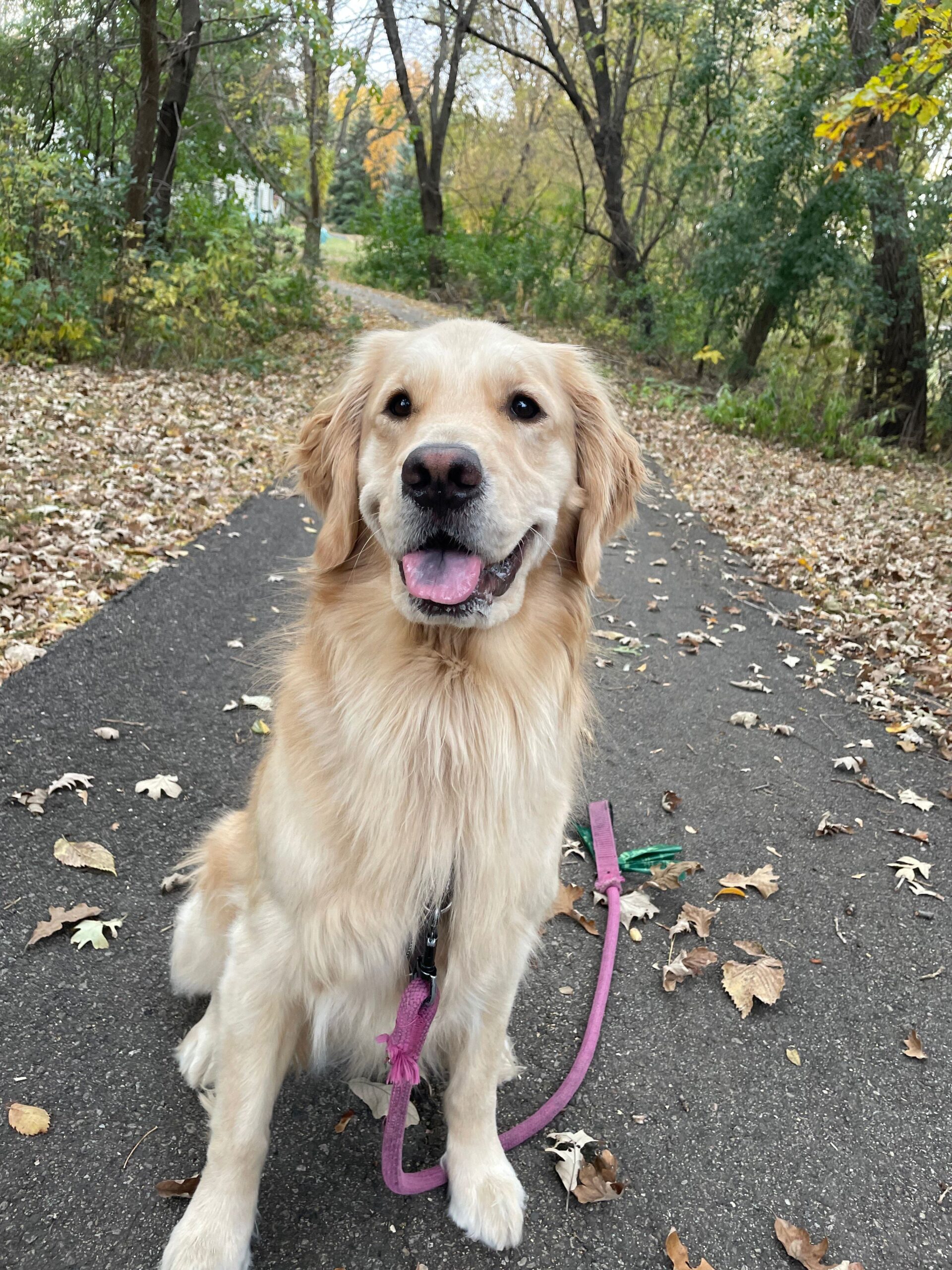
Mike Will (Wurl, LLC)’s 4 yr old Golden Retreiver, Zoey.
This week in Other Barks & Bites: a coalition of IP experts urges the UKIPO to disregard theories of patent holdup and royalty stacking that aren’t supported by empirical data; antitrust regulators in China will investigate Qualcomm’s potential violations of that nation’s anti-monopoly law after it acquired Autotalks; the Third Circuit tells Novo Nordisk that the determination of its injectable insulin drugs as eligible for Medicare negotiations is precluded from judicial review under the IRA; the U.S. Supreme Court asks for the U.S. Solicitor General’s views on whether a trademark’s conceptual strength is a question of law or fact; panelists debate the impacts of passing the Patent Eligibility Restoration Act before the Senate IP Subcommittee; the Motion Picture Association tells OpenAI that it’s the generative AI firm’s responsibility to address copyright liability posed by infringing outputs; and the UPC announces a new third appellate panel to hear cases at its Court of Appeal beginning in January.
Bites
Panelists Debate Pre-Alice Concerns, Unclear Section 101 Law in Senate PERA Hearing – On Wednesday, October 8, the U.S. Senate Committee on the Judiciary’s Subcommittee on Intellectual Property held a hearing to debate the most recently introduced version of the Patent Eligibility Restoration Act (PERA), hearing testimony from two pairs of panels on the bill that, if passed, would abrogate U.S. Supreme Court rulings impacting subject matter eligibility under 35 U.S.C. § 101. In the first panel, Mark Lemon of the National Retail Foundation warned of a return to pre-Alice business method patents supporting patent trolls, while former U.S. Patent and Trademark Office Directors Andrei Iancu and David Kappos both noted how courts have confused Supreme Court mandates on Section 101. In the second panel, which featured lawyers and executives in the diagnostics industry, panelists debated the bill’s potential impact on gene patents stemming from amendments made to the current version of PERA, including the removal of language indicating that human genetic innovations could be patent-eligible if isolated.
IP Experts Submit Comment to Address SEP Misconceptions During UKIPO Consultation – On Tuesday, October 7, a collection of 25 experts of intellectual property and competition law, including scholars, former U.S. judges and former U.S. government officials, submitted a comment as part of the United Kingdom Intellectual Property Office’s (UKIPO) consultation on standard essential patents (SEPs) addressing misconceptions that have allowed to infect political debate despite the lack of empirical evidence on patent holdup and royalty stacking caused by SEPs. The IP experts also attacked a suggested initiative to create a Rate Determination Track for establishing SEP licensing rates by an administrative procedure within the UKIPO, noting that courts and regulators are not as well-positioned as the daily market players to create licensing rates that work most efficiently for the industry and consumers.
Third Circuit Says IRA’s Judicial Bar Precludes Review of Drugs Selected for Medicare Negotiations – On Monday, October 6, the U.S. Court of Appeals for the Third Circuit issued a ruling in Novo Nordisk Inc. v. Secretary U.S. Department of Health & Human Services affirming the District of New Jersey’s grant of summary judgment to the U.S. government nixing Novo Nordisk’s challenge to the Centers for Medicare & Medicaid’s (CMS) determination that six of its injectable insulin products sharing the same active ingredient could be grouped together as a single drug for price negotiations under the Inflation Reduction Act (IRA). The Third Circuit ruled that the bar against judicial review for determinations of negotiation-eligible and single source drugs for the IRA’s Medicare Drug Price Negotiation Program were precluded from judicial review by 42 U.S.C. § 1320f-7(2), and also found that Novo Nordisk’s due process and compelled speech constitutional challenges failed for the same reasons given by the Third Circuit to other pharmaceutical firms challenging the IRA’s Medicare negotiation program earlier this year, including Bristol Myers Squibb and AstraZeneca.
SCOTUS Asks for Solicitor General’s Views on Trademark Strength as Question of Fact – On Monday, October 6, the U.S. Supreme Court issued an order list showing that the nation’s highest court requested the U.S. Solicitor General to submit a brief reflecting the views of the U.S. federal government on the issues at play in RiseandShine Corp. v. PepsiCo, Inc., which challenges the U.S. Court of Appeals for the Second Circuit’s July 2022 ruling reversing an injunction against Pepsi’s “Mtn Dew RISE Energy” after finding that RiseandShine’s “RISE” mark was inherently weak because it was suggestive of the benefits of drinking the plaintiff’s coffee products. RiseandShine’s petition for writ urges the Supreme Court to solve a circuit split, arguing that the Second Circuit is the only regional circuit court that considers trademark strength a legal question to be answered by a judge and arguing that the Second Circuit’s ruling stands in tension with SCOTUS case law establishing that a trademark’s conceptual strength is squarely a factual question.
Motion Picture Association Urges OpenAI to Address Sora 2 Copyright Infringement – On Monday, October 6, Charles Rivkin, the Chairman and CEO of the Motion Picture Association (MPA), issued a statement urging OpenAI to deal with the massive proliferation of videos using copyrighted characters that have been generated with the use of OpenAI’s Sora 2 video generation platform since it was first released online in late September. Rivkin clarified that the responsibility for addressing the potential of producing copyright-infringing videos remained with OpenAI, the owner and operator of Sora 2, in response to a blog post by OpenAI CEO Sam Altman announcing that copyright owners will be given greater control over how their characters are utilized in AI-generated videos created by Sora 2.
Anthropic AI’s MTD Claims over Generated Lyrics Fails Weeks After Landmark Settlement – On Monday, October 6, U.S. District Judge Eumi Lee of the Northern District of California denied a motion to dismiss filed by generative artificial intelligence company Anthropic, refusing to throw out a complaint filed by music publishers Universal Music Group, Concord Music Group and ABKCO against Anthropic over claims that its chatbot Claude created outputs infringing the copyright to lyrics from over 500 songs. Judge Lee’s ruling follows about two weeks after U.S. District Judge William Alsup of the Northern District of California approved a landmark $1.5 billion settlement agreement to end a class action lawsuit filed against Anthropic for allegedly infringing copyright to hundreds of thousands of books to train its Claude chatbot, reportedly the largest public copyright recovery in history.
Barks
UPC Announces Third Panel at Courts of Appeal to Begin Hearing Cases in January – On Friday, October 10, the Unified Patent Court (UPC) announced that it would be setting up a third panel of judges to serve at the UPC’s Court of Appeal and begin hearing cases in January, the panel comprised of Ulrike Voß, Bart van den Broek and Nathalie Sabotier, in response to a steady rise of UPC cases and corresponding increase in appeals.
Ninth Circuit Affirms Bad Faith Ruling in Cybersquatting Case Against Lambo.com – On Thursday, August 9, the U.S. Court of Appeals for the Ninth Circuit issued a ruling in Blair v. Automobili Lamborghini S.P.A. affirming the District of Arizona’s dismissal of a declaratory judgment action by Richard Blair after finding that statutory factors enumerated by the Anticybersquatting Consumer Protection Act (ACPA) weighed in favor of finding that plaintiff Richard Blair exhibited a bad faith intent to profit off Lamborghini’s trademarks in registering the domain to lambo.com.
Ninth Circuit Won’t Set Aside Default Judgment, Affirms $9.3 Million Trademark Damages Award – On Thursday, August 9, the Ninth Circuit issued a ruling in Clarke v. TNSG Health Co., Ltd. finding that the Central District of California did not abuse its discretion in granting default judgment in a trademark case and awarding maximum statutory damages of $4 million for infringement of two trademarks as well as attorneys’ fees of $5.3 million for the appellants’ unreasonable litigation conduct.
USPTO to Accept 1,600 Patent Applications in AI Search Pilot Program – On Wednesday, August 8, the U.S. Patent and Trademark Office issued a notice in the Federal Register announcing that the agency would be implementing an Automated Search Pilot Program, which will test automated prior art search tools on up to 1,600 patent applications across all tech sectors to assess the impact of pre-examination search reports on the way that patent applications are prosecuted.
CFC Dismisses Frivolous Trademark Claims Filed Over Use of Name in Criminal Matter – On Tuesday, August 7, the U.S. Court of Federal Claims issued a ruling in Harris-Johnson v. United States dismissing an amended complaint seeking damages against the U.S. government, finding that the plaintiff’s claims of trademark infringement caused by the use of her name in court filings involving a criminal matter currently ongoing against the plaintiff were frivolous and failed to state a claim upon which relief could be granted.
Gender Equality, Invention Curricula Initiatives in EPO’s New 2026-27 Work Plan – On Tuesday, August 7, the European Patent Office (EPO) announced that it had published a new biennial work plan for 2026-27 focused on removing barriers to the innovation ecosystem and including new initiatives on gender representation and equality in STEM fields and assessing how innovation and entrepreneurship are taught in school curricula.
This Week on Wall Street
China Antitrust Regulators Reportedly Investigating Qualcomm’s Autotalk Purchase – On Friday, October 10, officials from China’s State Administration of Market Regulation (SAMR) announced that American semiconductor company Qualcomm would be investigated for potential violations of China’s anti-monopoly law following its recent purchase of Israeli connected vehicle developer Autotalks.
Quarterly Earnings – The following firms identified among the IPO’s Top 300 Patent Recipients for 2024 are announcing quarterly earnings next week (2023 rank in parentheses):
- Monday: None
- Tuesday: Johnson & Johnson (21st); JPMorgan Chase & Co. (t-183rd); Telefonaktiebolaget LM Ericsson (22nd); Wells Fargo & Co. (81st)
- Wednesday: Abbott Laboratories (119th); ASML Holding N.V. (t-194th); Bank of America Corp. (58th);
- Thursday: ABB Ltd. (155th)












Join the Discussion
No comments yet.